What Smart Cities Rankings Mean for Critical Infrastructure Intelligence
A recent ranking of U.S. cities for technology services highlights concentrated innovation hubs that matter for critical infrastructure owners. Here’s what the findings mean for infrastructure monitoring, digital twins, predictive maintenance and operational resilience.
Introduction
Recent coverage highlighting eight U.S. cities as leaders in “intelligent” technology services is more than a business story — it’s a signal for critical infrastructure owners and operators. As municipal priorities shift toward digital services, these urban centers become focal points for the deployment and maturation of technologies that underpin infrastructure intelligence: IoT sensors, AI inspection, digital twins, edge computing and predictive maintenance platforms. Understanding why certain cities rise to the top helps infrastructure professionals prioritize partnerships, pilots and investment strategies.
What happened
Industry analysis and media reporting identified a cohort of U.S. cities that stand out for their concentration of technology service providers, skilled workforces and municipal initiatives supporting smart-city solutions. These rankings typically combine metrics such as the number of tech firms, availability of data center and cloud services, broadband and 5G coverage, the presence of testbeds for autonomous systems and public-private collaborations that accelerate deployment. The result: clear geographic clusters where vendors, pilots and client agencies converge, producing faster technology adoption cycles and richer operational data sets.
Key characteristics of ranked cities
Top-ranked cities usually share several attributes: dense ecosystems of startups and integrators, active municipal programs for open data and mobility pilots, university research centers, available talent pools for AI and software engineering, and investors funding smart infrastructure initiatives. For critical infrastructure, these clusters become practical incubators where new monitoring and maintenance approaches can be validated at scale.
Why this matters for critical infrastructure owners and operators
Infrastructure owners should treat these rankings as indicators of where operational innovation is concentrating. The implications are threefold: opportunity, risk and strategic urgency.
Opportunity: Cities with strong tech services offer easier access to vendors and proof-of-concept partnerships for digital twins, AI-driven inspection and advanced sensor networks. Operators can leverage local integrators to pilot new sensing modalities (e.g., fiber optic strain sensing on bridges, distributed acoustic monitoring in pipelines) and join municipal testbeds that provide realistic environments and data-sharing frameworks.
Risk: Concentration also creates dependencies. Vendor ecosystems concentrated in a few locales can produce regional supply-chain bottlenecks and potential single points of failure if operators lock into proprietary platforms without portability. Additionally, cities that rapidly digitize without robust cybersecurity and governance increase exposure to systemic risk for utilities, transit and other critical services.
Strategic urgency: The pace of capability maturation in these hubs means lagging owners risk operational obsolescence. Adoption of predictive maintenance and analytics in leading cities is already reducing downtime and optimizing capital expenditures; other operators should act to avoid falling behind.
How enabling technologies tie in
IoT sensors and edge AI
Sensor density in top-ranked cities enables richer situational awareness. From distributed vibration sensors on bridges and rails to smart meters in utilities, dense deployments feed high-frequency data streams. Edge AI brings preprocessing and anomaly detection close to the sensor, lowering latency and bandwidth costs while preserving privacy. For example, edge models can identify unusual vibration signatures on a bridge and only forward event metadata to central systems, reducing data loads and allowing immediate local action.
Digital twins and predictive maintenance
Digital twins aggregate multi-source data — structural modeling, SCADA, environmental sensors, inspection imagery — into unified models that support lifecycle decision-making. In cities with active technology services, operators can use digital twins for scenario planning, failure mode analysis and predictive maintenance. AI-driven prognostics run on twin representations to prioritize interventions and optimize maintenance schedules based on remaining useful life estimates.
Computer vision and AI inspection
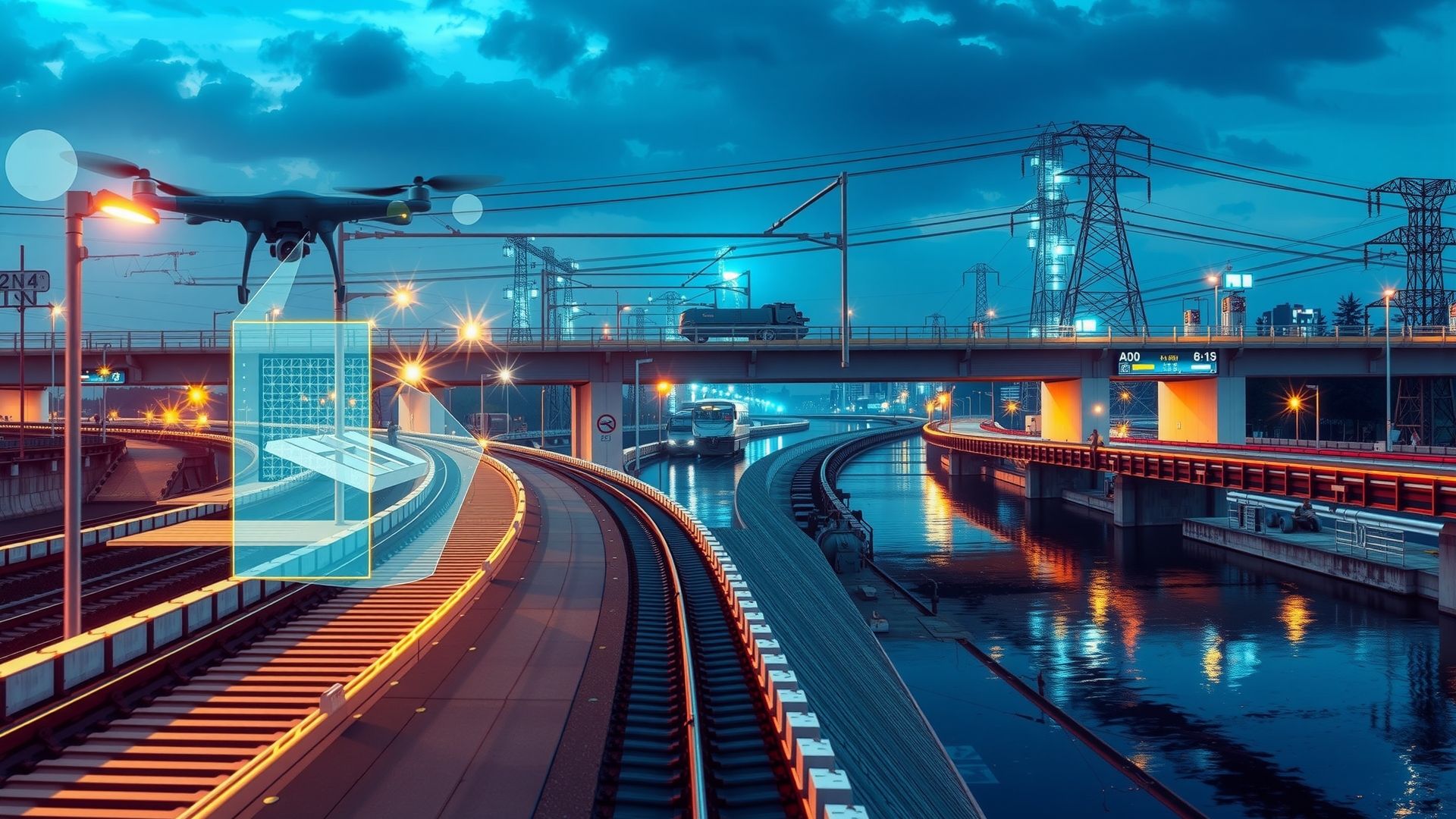
Computer vision is maturing rapidly in urban testbeds. High-resolution imagery from drones, fixed cameras and mobile inspection rigs, combined with trained AI models, automates detection of cracks, corrosion, vegetation encroachment and other defects. Cities that host a concentration of computer vision vendors often provide datasets and annotation resources that accelerate model refinement specific to infrastructure assets.
Practical engineering and operational insights
For infrastructure teams planning to leverage the innovation concentrated in these cities, several pragmatic considerations emerge:
1. Specify open data interfaces and portability up front. Insist on APIs, standardized data formats (e.g., WaterML, CIM for utilities) and model exportability to avoid vendor lock-in.
2. Design layered architectures. Use edge gateways for preprocessing, regional cloud for analytics and central systems for archival and policy control. This reduces latency and provides resilience against network outages.
3. Prioritize data quality and calibration. Sensors require regular verification and contextualization. Calibration plans, reference sensors and environmental compensation improve predictive model performance.
4. Treat cybersecurity and governance as primary engineering requirements. Secure boot, hardware attestation and encryption must be built into any IoT rollout. Operational playbooks should include incident response and rollback procedures for autonomous remediation functions.
5. Build human-in-the-loop processes. AI should augment inspectors and operators rather than replace them. Define thresholds for automated actions and handoff points to human supervisors, ensuring transparency and accountability.
Future industry implications
The concentration of smart-city tech services is likely to accelerate the commercialization of advanced infrastructure intelligence tools, but it will also shape how the industry organizes. Expect more regional centers of excellence that provide bundled services — data ingestion, digital twin creation, AI model tenancy — and more municipal procurement frameworks that standardize requirements. This could lower barriers for smaller utilities to adopt predictive maintenance but also increase competition for talent and push standardization efforts forward.
Regulatory and funding mechanisms will evolve in response. Federal and state grants are likely to favor projects demonstrating interoperability and resilience, increasing the value of pilots conducted in these cities. At the same time, operators must be vigilant against vendor concentration risks and push for open ecosystems that allow cross-jurisdictional collaboration.
Conclusion
The recent ranking of “intelligent” U.S. cities signals where critical infrastructure innovation is coalescing — and offers a roadmap for owners and operators seeking to modernize. By partnering with local tech ecosystems, adopting modular architectures, and enforcing data and cybersecurity standards, infrastructure organizations can harness digital twins, AI inspection and predictive maintenance to reduce downtime, extend asset life and enhance resilience. The key is deliberate action: pilot where the expertise exists, codify lessons quickly, and build interoperable systems that scale beyond any single city or vendor.