Rideshare Dashcams, Police Coaching, and the Risks to Content Authenticity and Identity Trust
A recent Wired investigation reveals plans by dashcam vendor Flock to deploy cameras in rideshare vehicles and to surface curated footage for law‑enforcement coaching. The initiative raises urgent questions about how captured video is authenticated, who controls access, and how such systems could amplify bias, enable misidentification, or be abused when combined with advanced manipulation tools.
Introduction
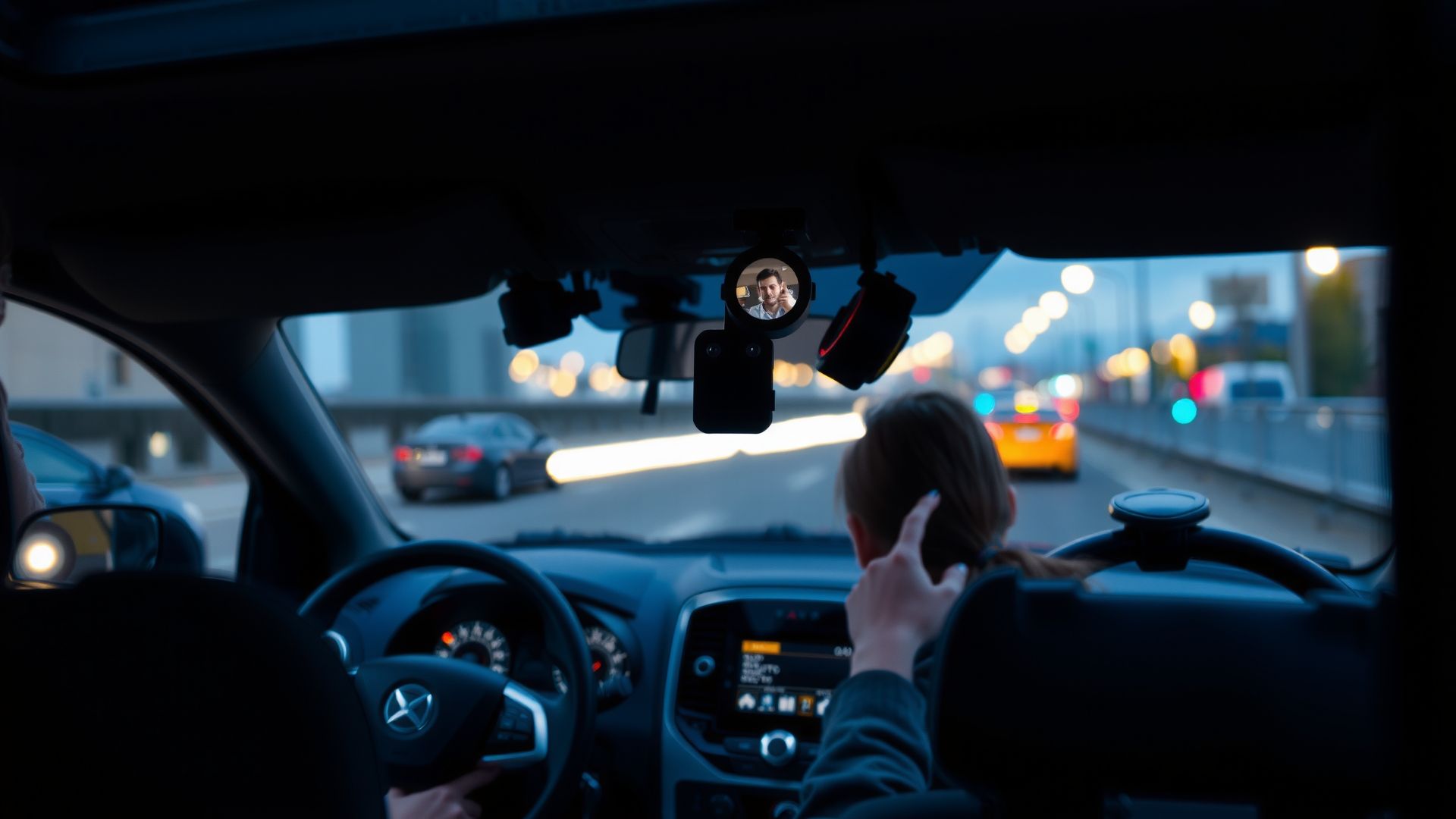
Technology firms that collect and distribute visual evidence are increasingly positioned as intermediaries between everyday people and law enforcement. A recent report detailing Flock’s plans to equip rideshare vehicles with inward- and outward-facing dashcams and to provide curated clips for police coaching highlights a growing intersection of commercial surveillance, evidence workflows, and algorithmic decision making. That combination raises questions about content authenticity, chain of custody, and identity trust at a time when manipulated media and automated recognition systems are both ubiquitous and fallible.
Video captured in a rideshare setting is visually rich and context-heavy: it records faces, tones, gestures, license plates, and location traces. Those features make such footage potent for investigative or training use, but also make it a vector for privacy harms, misinterpretation, and manipulation. As vendors market integrated pipelines that crop, tag, and present clips to officers, critical safeguards for provenance, tamper resistance, and bias mitigation must be assessed.
What happened
The investigation revealed that Flock, which supplies camera systems and analytics to fleet operators, has proposed plans to expand into the rideshare market and to offer services that extract short video segments—often centered on incidents of interest—and surface them to law enforcement for coaching and investigatory purposes. The process reportedly involves automated detection algorithms that flag events such as collisions, aggressive driving, or suspected criminal activity. Those events are then reviewable by humans and can be packaged as exemplars for training or as leads for police follow‑up.
Conversations with industry insiders also suggest that the company envisions a workflow in which footage is indexed, annotated, and retained in cloud repositories, with access controls that allow partner agencies to view or request material. While proponents pitch these systems as improving safety and speeding investigations, the leaked plans show limited public discussion of how integrity of the footage will be verified, how long clips will be stored, and what oversight mechanisms will govern law enforcement access and reuse—particularly for non-investigative purposes like training and performance review.
Why it matters
First, the provenance of visual evidence matters to its credibility. In courtrooms, in internal disciplinary processes, and in public debate, parties increasingly treat video as near‑incontrovertible proof. But raw video is not inherently trustworthy. Editing, selective cropping, contextual omission, compression artifacts, and even deliberate manipulation using generative tools can change the apparent meaning of an event. When a vendor processes and curates clips before passing them to police, those edits—and the criteria that produced them—become part of the evidentiary chain. Without transparent metadata and cryptographic attestation, recipients cannot reliably determine whether a clip represents an unaltered capture or an excerpt framed to emphasize a particular narrative.
Second, rideshare footage implicates identity trust and the risk of misidentification. Automated detection systems and face analytics are known to perform unevenly across demographic groups. If curated video is used for officer coaching, biased selections could normalize misinterpretations of behavior from particular communities. Similarly, if footage is used as investigative leads, flawed recognition or incorrect metadata (for example, misattributed license plates or mismatched timestamps) can cascade into wrongful suspicion, stops, or arrests. The stakes are heightened when vendors operate at scale across cities and maintain sizeable archives that could be retrospectively searched and repurposed.
Third, surveillance systems are attractive targets for misuse and cyberattack. Cloud repositories of interior vehicle footage can include intimate details—conversations, faces, home addresses inferred from routes—that can be weaponized by bad actors. Account takeover or unauthorized API access could leak troves of footage, enabling doxxing, stalking, or blackmail. Moreover, captured clips could serve as raw training data for generative models that synthesize likenesses, producing deepfakes that further erode the evidentiary value of real video and complicate identity verification efforts.
Security and trust implications
From a security engineering perspective, the system design choices matter. Provenance protections such as cryptographic signing of camera streams at the point of capture, immutable audit logs, and end-to-end encryption can reduce the risk of undetected tampering. Metadata standards that record device identifiers, capture timestamps, and processing steps should accompany each clip to allow independent verification. However, technical controls alone are insufficient: access governance, retention policies, and transparent partnership agreements with law enforcement are necessary to limit scope creep and to ensure that footage is not used for training or operational activities absent appropriate oversight.
Equally critical are policy safeguards to mitigate bias and prevent harmful feedback loops. If vendors provide curated exemplars for police coaching, they should publish the selection criteria, sampling methodology, and demographic breakdowns of the training set. Independent audits and third‑party testing of detection and recognition models can surface performance disparities. Agencies using those materials must treat curated clips as pedagogical examples rather than objective truth and pair them with contextual materials and debriefs that emphasize uncertainty and the limits of algorithmic inference.
Finally, the risk of synthetic-media abuse looms large. High-quality interior footage is a fertile training resource for generative adversarial networks that can synthesize believable forgeries of faces, voices, and scenes. If authentic clips leak or are poorly protected, they can accelerate the creation of convincing deepfakes that impersonate passengers, drivers, or officers. That dynamic further complicates chain‑of‑custody claims: defenders and prosecutors alike may need robust cryptographic provenance and independent forensic methods to distinguish genuine captures from expertly fabricated fakes.
Conclusion
The prospect of widespread rideshare dashcams feeding curated clips to police illustrates how convenience and safety narratives can obscure profound implications for content authenticity and identity trust. Video is a powerful form of evidence, but its value depends on demonstrable integrity, transparent processing, and accountable governance. As vendors scale and as generative tools make manipulation easier, companies and public agencies must adopt stronger technical safeguards, clearer policies, and independent oversight to preserve the evidentiary and civic utility of captured media while protecting privacy and preventing abuse.
Absent those measures, networks of commercial cameras and analytic pipelines risk amplifying bias, enabling misidentification, and creating new attack surfaces for privacy and security breaches. Policymakers, technologists, and civil society should push for standards that require provenance metadata, enforceable access controls, independent audits, and explicit limitations on how footage can be repurposed for training or disciplinary processes. The choices made now will shape whether recorded video strengthens trust or accelerates mistrust in institutions that depend on it.