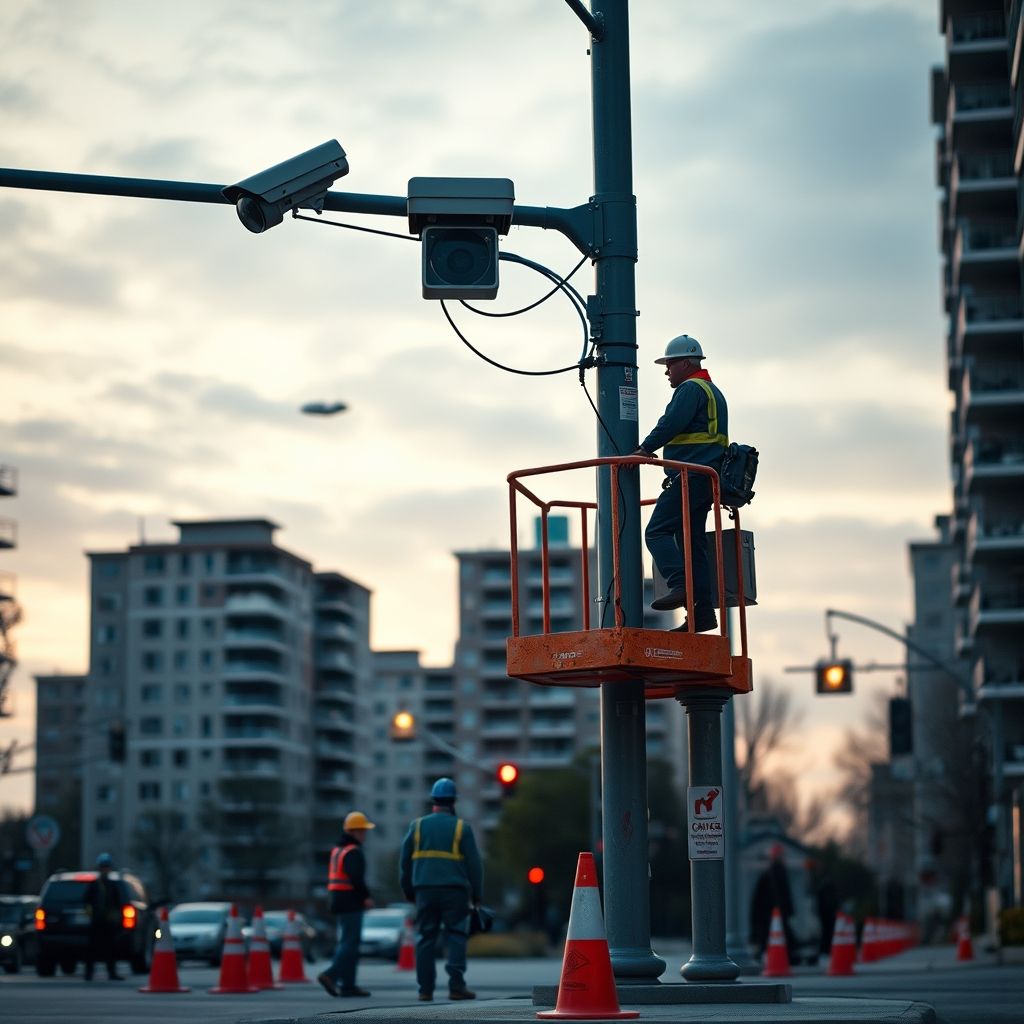
Flock Buyouts and the Surveillance Backlash: What the Retreat from License-Plate Readers Means for Identity and Trust
Flock, a maker of license-plate reader (LPR) systems, is offering voluntary buyouts as dozens of cities cut ties amid concerns over privacy, accuracy, and oversight. The company’s retreat highlights broader tensions at the intersection of mass surveillance, identity verification, and trust in automated systems.
Introduction
In recent months, a number of U.S. cities have moved to terminate contracts with vendors that supply automatic license-plate readers (LPRs), citing concerns ranging from privacy and civil liberties to data accuracy and lack of public oversight. Flock, a prominent provider of LPR systems and analytics, has responded by offering voluntary buyouts to employees even as several municipal customers withdraw. This development is more than a business story: it is a flashpoint in debates about how automated surveillance technologies intersect with identity systems, public trust, and the security of the datasets that underpin many modern investigations and services.
The controversy highlights important questions for technologists and policymakers: How should communities evaluate the tradeoffs of automated identity-related surveillance? What governance, transparency, and technical safeguards are necessary to prevent misuse? And how does the withdrawal of a vendor affect the integrity and provenance of historical datasets assembled through years of sensor deployments?
What happened
Flock, long known for deploying networks of cameras that capture and index vehicle license plates, has faced a cascade of contract terminations from cities and municipalities. Local leaders and privacy advocates have criticized the company’s products for enabling continuous location tracking, for opaque retention policies, and for integrating LPR outputs into broader analytics services without sufficient public review. As public pressure mounted and procurement decisions turned against the firm, Flock instituted a voluntary severance program for staff, according to reporting on the company’s financial and operational strain.
The municipal pushback has taken several forms: formal bans on LPR acquisition or retention, limits on how long plate data can be stored, requirements for audit and transparency, and in some cases, outright termination of field deployments. These moves reflect rising skepticism among local communities about the long-term social and legal costs of ambient identity capture, as well as concern about whether private vendors can be effectively governed once data expands beyond the original operational purpose.
Why it matters
License-plate reader systems sit at a unique junction between physical surveillance and digital identity data. On their face, LPRs are designed to assist with traffic management, tolling, and law enforcement alerts. In practice, the continuous capture and centralized indexing of plate reads creates historical location trails that can be used for routine public-safety work but also for far-reaching investigative or non-consensual tracking. The scale and persistence of such records can erode public trust, particularly when deployment happened with limited public input or inadequate safeguards.
The market reaction—cities discontinuing contracts and a vendor downsizing—signals that public appetite for unfettered automated tracking is waning. For technologists and security professionals, that retreat is a wake-up call: systems that process identity-relevant signals must be designed not only for accuracy but for trustworthiness. That includes clear provenance, understandable retention policies, audit logs, and accessible mechanisms for oversight and redress. Without these protections, data collected for one purpose can be repurposed in ways that undermine democratic norms and personal freedoms.
Security and trust implications
From an identity-trust perspective, LPR systems present multiple technical and governance risks. First, accuracy limitations and false positives can lead to erroneous identification and wrongful suspicion. Algorithms that misread plates, misassociate vehicles with people, or mishandle ambiguous images introduce concrete harm when used to inform enforcement actions or surveillance escalations.
Second, the aggregation of plate reads with other datasets—mobile location information, tolling records, video feeds—creates rich identity graphs that are tempting targets for misuse. If such combined datasets lack strong access controls and logging, they increase the risk of unauthorized query, profiling, or exposure. The potential for data breaches or improper internal access raises the specter of account takeover analogues for physical-world identity: an attacker with access to plate histories can impersonate movement patterns or facilitate stalking and targeted harassment.
Third, the provenance and authenticity of historical LPR records become critical when vendors exit the market or are forced to destroy or hand over datasets. Changes in custody and retention policies can affect evidentiary value and undermine public confidence in whether records have been altered, deleted selectively, or preserved with appropriate chain-of-custody. The security community increasingly recognizes that content authenticity tools—cryptographic logging, tamper-evident storage, and signed metadata—are essential to maintain the integrity of identity-linked records.
Fourth, there are cross-cutting concerns about algorithmic governance. LPR analytical layers may incorporate machine learning to cluster patterns, flag anomalies, or score risk. Without transparency about model behavior, bias assessments, and validation against ground truth, automated outputs can embed and amplify errors into policing and administrative workflows. Adversarial manipulation and targeted inputs could intentionally confuse models, undermining reliability at critical moments.
Finally, the rise of generative technologies increases the stakes. Synthetic media could be used to fabricate or alter visual evidence tied to vehicle movements, or to create false narratives that exploit recorded plate histories. Conversely, provenancing tools and authenticated telemetry could help distinguish genuine records from synthetic forgeries. The retreat from physical deployments should therefore accompany investments in verification, auditability, and standards for data integrity.
Conclusion
The Flock story is a cautionary tale about the limits of surveillance technologies in the absence of robust public governance and technical controls. Municipal decisions to end contracts reflect a recalibration of what communities deem acceptable in monitoring and recording movement at scale. For security practitioners, civil liberties advocates, and technologists, the episode underscores the need to treat identity-adjacent sensor systems as high-risk infrastructure that requires explicit safeguards: accuracy testing, retention limits, auditable provenance, strict access controls, and public transparency.
As vendors scale back or exit, policymakers will face consequential choices about the disposition of existing data, the standards applied to any future procurements, and the technical requirements for preserving integrity when datasets change hands. The moment also offers an opportunity for renewed standards: stronger provenance mechanisms to guarantee authenticity, independent audits to assess bias and accuracy, and clearer legal frameworks to limit misuse. Addressing these gaps is essential to restoring public trust in systems that touch on identity, surveillance, and the security of digitally mediated evidence.
Ultimately, the implications extend beyond one company. The debate over LPRs is emblematic of a broader reassessment of how societies govern automated systems that observe, record, and act on identity-linked signals. If the goal is a safer and more trustworthy public sphere, stakeholders must combine technical safeguards with democratic governance and enforceable accountability to ensure surveillance tools serve legitimate public interests without sacrificing civil liberties.