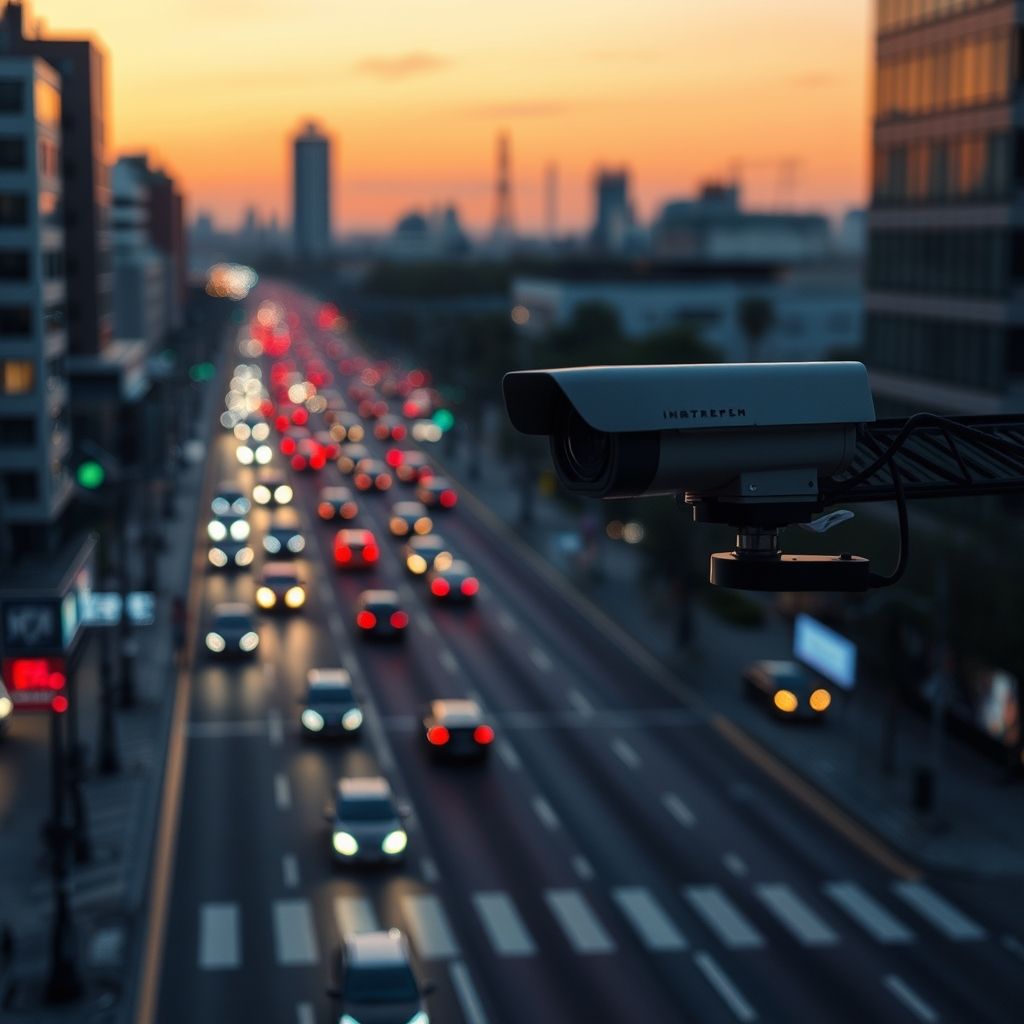
Edge AI for Urban Surveillance: Operationalizing Intelligent Video Analytics for Safer, Resilient Cities
As cities invest in camera networks, edge AI and intelligent video analytics are reshaping public safety, infrastructure monitoring, and operational decision-making. This article examines practical deployment considerations, cybersecurity risks, infrastructure impacts, and actionable recommendations for city planners, security operators, and integrators.
Introduction
Cities and infrastructure operators increasingly deploy cameras and sensors to enable public safety, traffic optimization, and asset monitoring. The shift from passive recording to real-time intelligence is driven by edge AI and intelligent video analytics: on-device models detect events, filter false alarms, and trigger automated responses. But moving from pilot to production exposes operational, cybersecurity, and governance challenges that can erode value if not managed proactively.
The Current Landscape: From Cameras to Context
Modern surveillance stacks are multi-layered. Cameras capture raw video, edge processors run lightweight neural networks to classify objects and behaviors, and centralized systems aggregate events into situational awareness dashboards. Use cases span threat detection, perimeter protection for critical infrastructure, crowd and traffic management, and worksite safety in industrial settings. Advances in model compression, hardware acceleration, and federated learning have made it feasible to run analytics at the edge—reducing bandwidth usage and latency while preserving uptime when networks are constrained.
Operational Challenges When Scaling Intelligent Video Analytics
Operationalizing intelligent surveillance is not only a technical exercise. Common challenges include high false-positive rates when models are trained on mismatched data, inconsistent metadata and event taxonomies across device vendors, and the need to integrate analytics outputs into existing workflows such as dispatch, SCADA interfaces, or public safety CAD systems. Successful programs standardize event ontologies, implement continuous model validation pipelines, and incorporate human-in-the-loop review for high-risk detections.
Edge AI Architecture: Design Patterns for Performance and Resilience
Edge-first architectures minimize latency and bandwidth usage by running core analytics where the data originates. Key design patterns include hierarchical processing (basic detection at the camera, richer analytics at local gateways), model partitioning (split inference between camera and gateway), and adaptive offloading (send only events or compressed clips to the cloud). Resilience must be baked in: redundant processing nodes, local storage for ring buffers, and automated failover ensure continuity for critical monitoring even during network outages.
Cybersecurity Implications and Risk Mitigation
Adding AI-enabled devices increases the attack surface. Threats include firmware compromise, model poisoning, eavesdropping on video streams, and lateral movement from camera networks into enterprise IT. Mitigation strategies should include hardware-based root of trust, secure boot, signed firmware updates, encrypted telemetry, and network segmentation with strict access controls. Additionally, integrity checks for models and inputs—such as anomaly detection for model behavior—help detect tampering and adversarial manipulation.
Data Governance, Privacy, and Ethical Oversight
Public acceptance hinges on transparent data governance. Cities and operators must define retention policies, anonymization techniques, and access controls that align with legal frameworks and community expectations. Privacy-enhancing technologies—on-device redaction, face-blurring, and purpose-limited data sharing—reduce risk while preserving utility. Governance bodies should include legal, technical, and civil society representatives to oversee policy-driven deployments and periodic audits.
Integration with Security Operations and Emergency Response
Intelligent video analytics delivers maximum value when tightly integrated with security operations centers (SOCs) and emergency response workflows. Alerts should be prioritized and contextualized—combining analytics confidence scores, geo-location, and historical patterns—to reduce alarm fatigue. Automated playbooks can route verified incidents to first responders with succinct multimedia evidence, while operators retain override capabilities. Training and tabletop exercises are essential so responders trust and understand AI-driven inputs during high-pressure events.
Infrastructure Impact and Critical Asset Protection
For utilities, transport hubs, and industrial sites, AI surveillance supports preventive maintenance, anomaly detection, and rapid incident triage. Video analytics can detect encroachment, equipment overheating (when paired with thermal sensors), and unsafe behaviors in real time. However, operational decisions based on analytics must account for sensor placement, environmental degradation of optics, and seasonal variations. Regular camera health checks and calibration routines reduce blind spots that undermine protective coverage.
Business Relevance and ROI Considerations
Beyond safety, intelligent surveillance can deliver measurable ROI: reduced manual monitoring costs, fewer false dispatches, faster incident resolution, and operational efficiencies like optimized traffic signal timing. Procurement should evaluate total cost of ownership—hardware lifecycle, software licensing, integration, and cybersecurity upkeep—rather than upfront camera cost alone. Vendor lock-in risk is mitigated by favoring open APIs, standardized event schemas, and modular architectures that allow swapping components without massive rip-and-replace projects.
Practical Deployment Checklist
Operators preparing to scale intelligent video analytics should follow a pragmatic pathway:
- Define objectives and success metrics (reduction in response time, false alarm rate, maintenance savings).
- Perform site surveys to optimize camera placement and environmental hardening.
- Standardize event taxonomies and integrate with SOC/CAD/asset management tools.
- Implement secure device onboarding, firmware management, and network segmentation.
- Deploy validation and monitoring pipelines to track model drift and camera health.
- Establish transparent data retention, access, and redaction policies with audit logging.
- Run cross-disciplinary training and tabletop drills to validate human-AI workflows.
Future Outlook: Interoperability and Adaptive Intelligence
Looking ahead, surveillance intelligence will trend toward interoperable ecosystems—federated analytics across agencies, multimodal sensor fusion, and adaptive models that learn from operational feedback without centralizing raw video. Advances in tinyML and specialized inference accelerators will push more capability onto low-power edge nodes, while privacy-preserving federated learning will enable model improvements without sharing personally identifiable data. Regulatory frameworks are evolving; proactive compliance will be a competitive advantage for vendors and operators alike.
Conclusion and Key Takeaways
Edge AI and intelligent video analytics can transform public safety and infrastructure monitoring—but not without operational rigor. Performance matters, but resilience, cybersecurity, governance, and human-centric workflows determine whether deployments deliver sustainable value. Treat analytics as part of an operational ecosystem: instrumented end-to-end, secured by design, and governed transparently. When cities and critical infrastructure owners align technology choices with operational needs and community expectations, AI surveillance becomes a force multiplier for safety and resilience rather than a liability.